WHAT SHAPED US DOES NOT DISAPPEAR, Lagos Nigeria
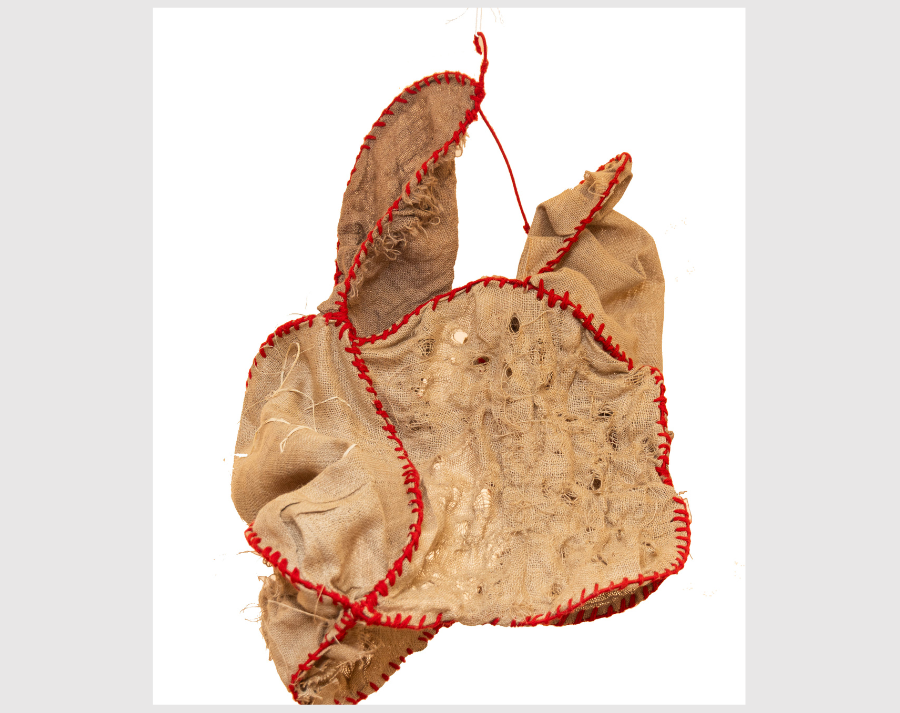
What Shaped Us Does Not Disappear, a solo exhibition by German-Nigerian artist Joke Amusan, explores how migration, memory, and ancestral knowledge shape our sense of self and belonging. Through suspended sculptural and textile artworks, Amusan invites viewers to reflect on what we carry with us (names, stories, proverbs, and histories), and how these intangible inheritances travel across distance and time.
The works inhabit space like bodies in a gentle conversation, revealing the bonds that hold us. Hanging from branches and reaching into space, they bridge the human and natural worlds. Organic forms emerge through cocoons, twisting vines, and spiralling structures that allude to cyclical journeys, movements inward toward origin and outward across generations.
... Working with hessian and yarn, Amusan twists, coils, and stitches materials into delicate yet resilient forms. The fragility of fibre sits alongside its tensile strength, reflecting the vulnerability and endurance embedded in lived experience. Her repetitive acts of stitching and binding echo traditions of nurture, repair, and communal making. Formation here is not solely personal becoming, but a collective process, something shaped, held, and transmitted across borders and bloodlines.
At the heart of the exhibition is the textile work Home Travels With Us, which speaks to the idea that home is not a fixed place but something we carry with us. The stitched words, text reads: “Home Travels With Us. In Names That Are Ours, In Proverbs Our Tongue Still Knows, In Stories We Tell.” emphasises how identity moves through language, memory, and shared narrative. Even when landscapes change, these inheritances remain. The act of stitching the text into hessian makes those inheritances more tangible, as if memory itself has been woven into the fabric. The work suggests that migration does not erase who we are.
Nigeria remains a living presence within Amusan’s practice. Its textures, languages, and oral traditions inform her visual vocabulary, surfacing through gesture and material memory. The works reach back as much as they extend forward, recalling what was seen, heard, and felt, and they function as vessels of remembrance, mapping the subtle yet enduring imprints of the homeland.
Through What Shaped Us Does Not Disappear, Amusan reflects on the intertwined nature of identity and ancestry like roots and branches forming enduring foundations. The exhibition returns to the persistent presence of home as a sustaining force: one that follows, carries, and shapes us, wherever we go.